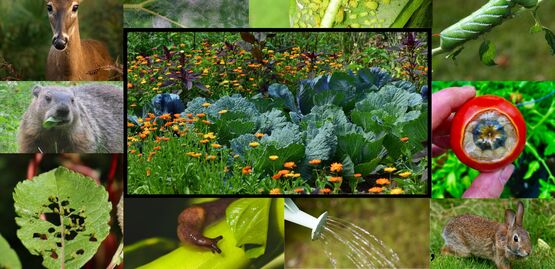
Common Summer Garden Problems and How to Manage Them
Summer in Allegany County brings warm days, cool nights, humidity, thunderstorms, and the occasional dry spell. Those same conditions that make our short growing season productive also create the ideal conditions for diseases, insects, and stress problems that frustrate local gardeners every season. Sitting in USDA Hardiness Zones 5a–5b, our gardens face a predictable set of midsummer challenges. The good news: most are manageable if you catch them early and respond with the right cultural practices before reaching for a chemical spray.
Here's a couple of the problems we hear about most often at the Extension office, and practical, research-based steps to keep your garden healthy through the season.
FUNGAL AND BACTERIAL DISEASES
Our humid summers and frequent overnight dew are a recipe for disease. Most fungal problems spread fastest when leaves stay wet, so prevention starts with air, sunlight, and dry foliage.
Early Blight & Late Blight (Tomatoes and Potatoes)
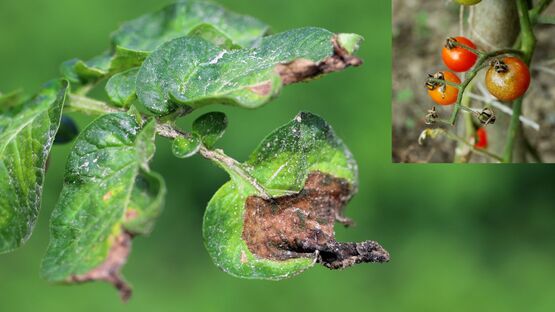
Early blight shows up as dark spots with concentric "target" rings on lower, older leaves, usually spreading upward as the season goes on. Late blight is more aggressive; greasy, gray-green blotches on leaves and stems that can destroy a crop in days during cool, wet weather, and it can spread across the region quickly.
Manage it:
- Space plants for good airflow and stake or cage them off the ground.
- Water at the base (soaker hose or drip), never overhead, and water in the morning.
- Mulch to prevent soil-borne spores from splashing onto leaves.
- Remove and destroy infected leaves; do not compost them.
- Rotate tomatoes and potatoes to a new spot each year (a 3-year rotation is ideal).
- If late blight is confirmed in the area, report it and consider a labeled fungicide promptly.
Powdery Mildew (Squash, Cucumbers, Pumpkins, Zinnias, Lilacs)
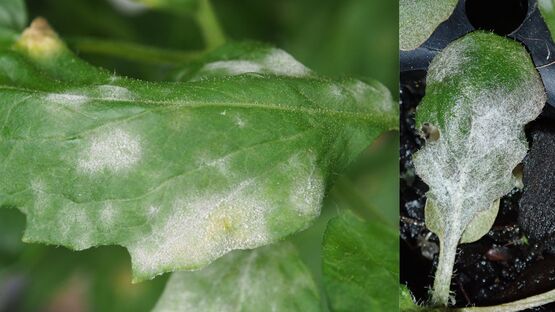
A white, powdery coating on leaf surfaces, most common late summer. It rarely kills plants outright but weakens them and reduces yields.
Manage it:
- Choose mildew-resistant varieties when available.
- Space plants generously and avoid heavy nitrogen, which produces tender, susceptible growth.
- Remove the worst-affected leaves.
- Horticultural oils, neem, or potassium-bicarbonate products can help if applied early.
Downy Mildew (Cucumbers, Basil)
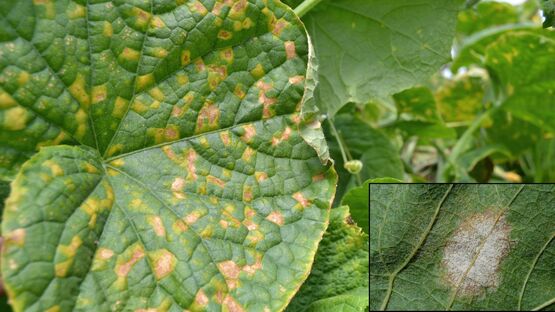
Yellow angular patches on the upper leaf surface with fuzzy gray growth beneath. It moves fast in wet weather and has been a recurring problem for cucumbers and basil in our region.
Manage it:
- Improve airflow
- Water at the base
- Grow resistant basil and cucumber varieties
- Harvest basil early and often.
INSECT PEST
Colorado Potato Beetle
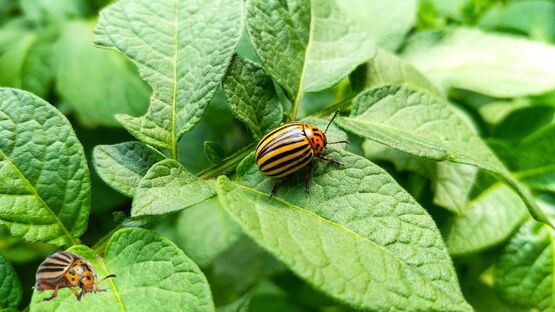
Yellow-and-black striped adults and plump reddish larvae that can strip potato, eggplant, and tomato foliage. Look for clusters of bright orange eggs on leaf undersides.
Manage it:
- Handpick adults, larvae, and egg masses into soapy water.
- Row covers early in the season help.
- Rotate crops annually.
Squash Bugs & Squash Vine Borer
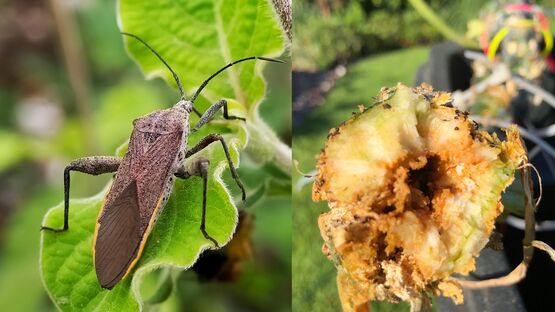
Squash bugs are flat, gray-brown insects that suck sap and cause wilting. The vine borer is a moth larva that tunnels into stems, causing plants to collapse suddenly, often the culprit when a healthy squash wilts overnight.
Manage it:
- Scout for and crush the bronze-colored egg clusters on stems and leaf undersides.
- Use row covers until flowering (remove them so pollinators can reach blossoms).
- Destroy vines at season's end to reduce overwintering populations.
Cucumber Beetles
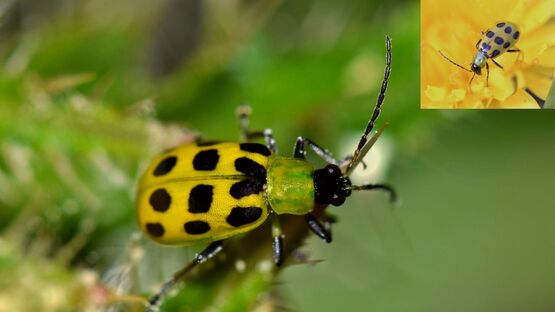
Striped or spotted yellow beetles that chew leaves and, more importantly, spread bacterial wilt — a disease that causes cucumbers and melons to wilt and die.
Manage it:
- Row covers until flowering
- Resistant varieties
- Prompt removal of wilting plants.
Japanese Beetles
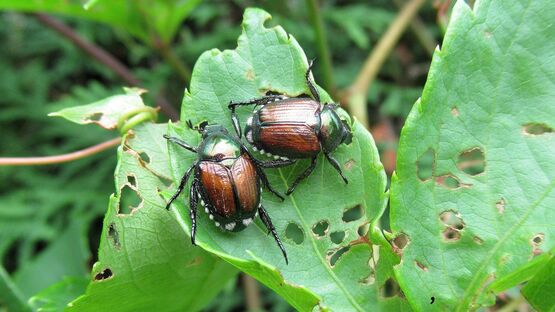
Metallic green-and-copper beetles that skeletonize leaves on roses, beans, raspberries, grapes, and many ornamentals from late June into August.
Manage it:
- Handpick into soapy water in the early morning when they're sluggish.
- Use biological products, such as B.T. (Bacillus thuringensis galleriae (Btg))
- Skip the pheromone traps, they tend to attract more beetles than they catch.
Tomato Hornworm
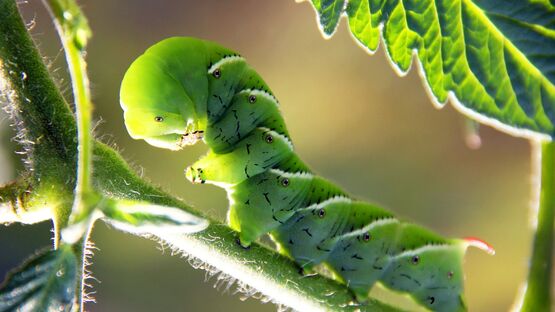
Large green caterpillars that can defoliate a tomato plant fast. They're well camouflaged, look for dark droppings and stripped stems.
Manage it:
- Handpick them off.
- Use biological products, such as B.T. (Bacillus thuringensis)
- If you see a hornworm covered in white rice-like cocoons, leave it, those are parasitic wasps that will help control future generations of hornworms.
Aphids & Slugs
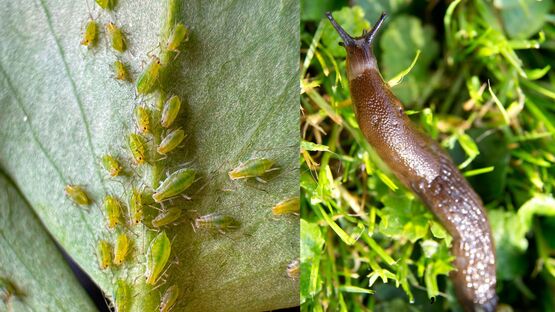
Aphids cluster on new growth and secrete sticky honeydew; slugs chew ragged holes and thrive in our damp weather.
Manage it:
- Blast aphids off with water or use insecticidal soap
- Encourage ladybugs and lacewings
- For slugs, reduce moisture and hiding spots
- Hand-pick in the evening, or use shallow beer traps and iron-phosphate baits.
ENVIRONMENTAL AND CULTURAL PROBLEMS
Not every problem is a pest or a pathogen. Some of the most common calls we get trace back to weather and watering.
Blossom End Rot (Tomatoes, Peppers, Squash)
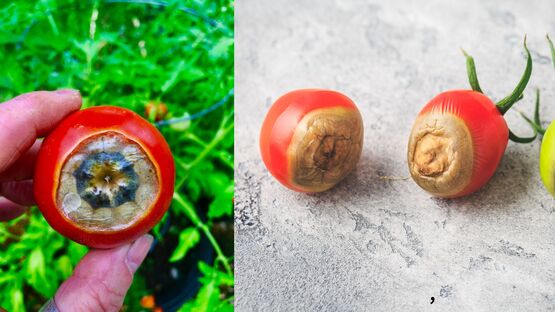
A sunken, leathery brown patch on the bottom of the fruit. It's not a disease caused by pathogens, it's a calcium delivery problem caused by uneven watering, not necessarily by low soil calcium.
Manage it:
- Water consistently and deeply (about 1 inch per week)
- Mulch to hold moisture
- Avoid over-fertilizing with nitrogen.
- It often corrects itself once watering evens out.
Drought Stress & Inconsistent Watering
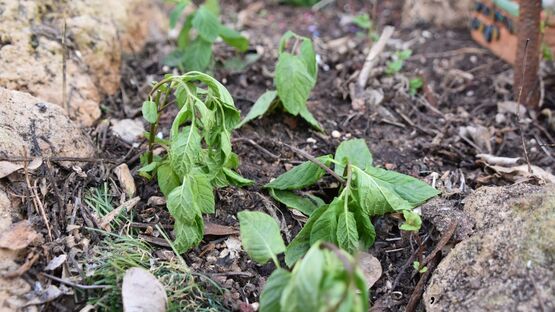
Wilting in the heat of the day, scorched leaf edges, and blossom drop. Our summers swing between soggy and bone-dry.
Manage it:
Water deeply and less often to encourage deep roots, water in the morning or late afternoon (not evening), and mulch 2–3 inches to conserve moisture and moderate soil temperature.
Sunscald & Heat Stress
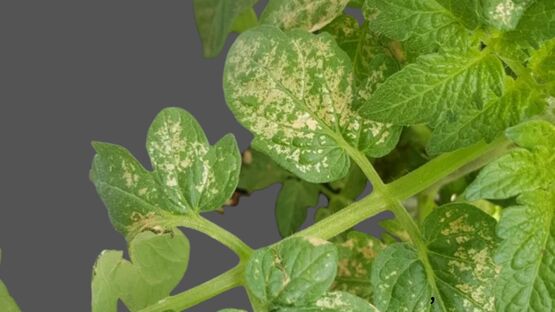
Pale, papery patches on fruit exposed to intense sun, especially after leaves are lost to disease. Keep plants healthy and foliage intact to shade developing fruit.
Poor Pollination
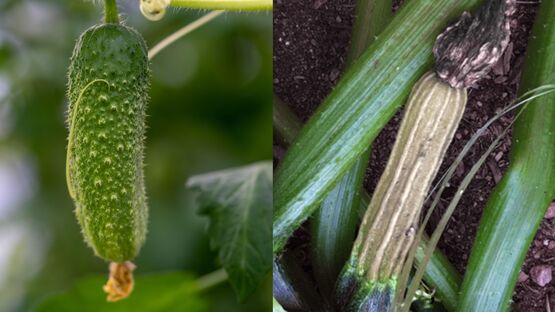
Squash and cucumbers that form tiny fruit then shrivel, or misshapen fruit, often signal weak pollination; common in wet weather or where pollinators are scarce.
Manage it:
- Plant pollinator-friendly flowers nearby
- Avoid spraying insecticides during bloom
- Hand-pollinate squash if needed
Deer, Rabbits & Woodchucks

In Allegany County, wildlife is one of the biggest challenges for gardeners. A tall (8-foot) fence or 3D-fence are the only fully reliable defense against deer. There are repellents that may help for a short time, but when they are hungry, even these repellents don't help much.
For rabbits and woodchucks in smaller plots, repellents rotated regularly, motion-activated sprinklers, and fencing sunk a few inches help.
A Simple Season-Long Strategy
Most summer garden trouble is prevented, not cured. Build these habits in and you'll spend far less time reacting:
- Scout weekly: Walk your garden and check leaf undersides. Early detection is everything.
- Water at the base, in the morning: Dry foliage resists disease.
- Mulch: It preserves water, blocks soil-borne spores, and suppresses weeds.
- Give plants room: Airflow is your cheapest "fungicide", it means, by improving air, fungal spores have less chance to start disease on your plants.
- Rotate crops: so soil-borne pests and diseases don't build up.
- Clean up: especially diseased material, promptly, take it out of your garden, don't compost it.
- Identify before you treat: The right diagnosis saves money and protects pollinators.
Need Help Identifying a Problem?
When you're not sure what you're looking at, we're here to help. Cornell Cooperative Extension Allegany County can help diagnose plant problems and recommend research-based solutions. Send a clear photo (or a couple of them) or bring a sample of the affected plant. Our educators and Master Gardener Volunteers can point you in the right direction. For lab identification, there are fees for each type of analysis, if you want these services, call or email before bringing your samples.
If you live in a different county, please contact your local Cooperative Extension Office, or we can provide the contact information of your local office.
Disclaimer: This article is for general educational purposes. If you need assistance applying pesticides, pruning trees, or controlling pests, please contact a licensed applicator or pest control company; and if you want to apply products on your own, understand the risks and always read and follow pesticide label directions: the label is the law!
Prevent problems in your garden this season and enjoy a great harvest. Happy Gardening!
Download the Summer Garden Troubleshooting Guide by clicking HERE.
Contact
Cristian Acosta
Agriculture Educator - Master Gardener Volunteer Coordinator
cfa34@cornell.edu
585-268-7644 ext 14
Last updated July 20, 2026